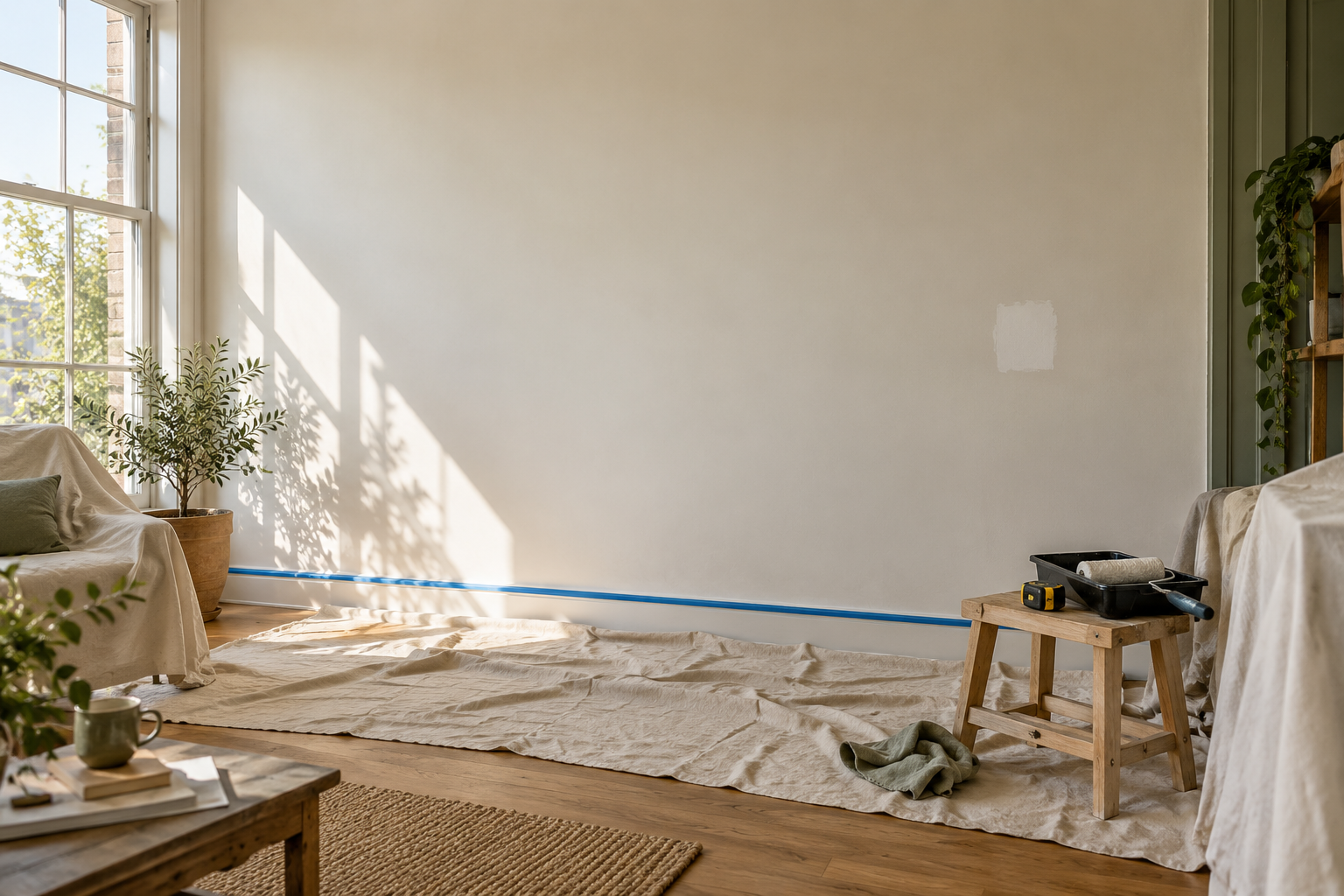
You have an idea for a custom mural: perhaps soft botanical shapes in your living room, an abstract feature behind a reception desk or a playful design for a family space. Before the first brushstroke, there is another part of the project to plan—the wall itself.
Knowing how to prepare a wall for a mural helps you give your artist useful information and avoid unnecessary work. You do not need to choose a primer or repaint the room before your consultation. Start by checking the space, taking photos and discussing the surface with your mural artist.
1. Choose the Wall with the Whole Room in Mind
The largest wall is not always the best choice. Think about where people enter, sit and spend time. A mural should make sense from the viewpoints used most often.
Look at what sits in front of the wall. A sofa, shelving unit or reception desk can hide much of a design. Share these details early so the artist can place the main elements in visible areas.
For a home, consider how the artwork relates to adjoining rooms. For a business, consider the view from the entrance and whether the wall will appear in customer photos.
2. Take Clear Photos and Measurements
Take one photo showing the entire wall straight on, then a wider photo showing the surrounding room. Add close-up images of any cracks, peeling paint or unusual texture.
Measure the wall’s width and height. Include the position of doors, windows, outlets and fixed furniture. These details help the artist understand the available painting area and develop a composition that fits.
If you are still deciding between two walls, photograph both. Sometimes a smaller, less interrupted surface offers more flexibility than a large wall with several fixtures.
3. Tell Your Artist About the Existing Surface
A smooth painted wall, exposed brick and a heavily textured surface need different approaches. Even two painted walls may behave differently if their existing finishes are different.
Share anything you know about the current wall: when it was last painted, the paint product if available and whether it has previously held wallpaper or adhesive decorations.
Avoid choosing a new base coat or primer before discussing it with the artist. The appropriate preparation depends on the surface and the materials planned for the mural.
4. Resolve Wall Problems Before Painting
Peeling paint, loose material and damaged areas should be assessed before the design is applied. Painting artwork over an unstable surface will not fix the underlying problem.
If there are damp patches, recurring staining or signs of a leak, identify and resolve the cause before scheduling mural work. Ask the artist which repairs belong in the mural preparation scope and which need to be completed separately.
The goal is a sound, suitable surface. Agree on who will handle repairs, cleaning and any base coating so that responsibilities are clear.
5. Check the Lighting and Colour Palette
Photograph the wall in daytime and with the lights you normally use in the evening. A colour that feels soft in daylight may look warmer or darker under another light source.
Share photos of nearby flooring, curtains, upholstery and furniture. Your artist can use these details to develop a palette that feels connected to the room.
Physical colour samples can be helpful when colour matching matters. Treat images on a phone or computer as references rather than exact predictions of the finished paint colour.
6. Plan Access and Clear the Painting Area
Before the painting date, agree on how much space the artist needs in front of the wall. Move portable furniture and fragile belongings out of the work area, following the agreed plan.
Discuss who will protect the flooring and nearby fixtures. For larger or taller walls, confirm access requirements in advance rather than assuming an ordinary household ladder will be suitable.
If the mural is for a business, explain opening hours, deliveries and busy periods. This helps establish a practical schedule for painting and returning the area to use.
7. Leave Time for Preparation and Drying
Wall repairs, base coats and mural layers may each need time before the next step. There is no single waiting period that suits every material or room.
Ask for a project schedule that includes preparation, painting and the recommended time before furniture is moved back or the wall is cleaned. The artist should plan around the selected products and the conditions in the space.
If you have an opening date, event or renovation deadline, mention it at the first conversation.
Your Pre-Mural Checklist
- Photograph the full wall and the surrounding room.
- Measure the wall and note fixed features.
- Share close-ups of damage or texture.
- Gather a few design references and explain what you like about each.
- Discuss the budget, timing and wall preparation responsibilities.
- Confirm how the painting area will be cleared and protected.
Frequently Asked Questions
Should I paint the wall white before a mural?
Not automatically. The base colour is part of the design, and preparation depends on the existing surface. Ask your artist before buying paint or repainting.
Can a mural work on a textured wall?
It may, but the texture affects the painting technique and the level of detail that will read clearly. Send close-up photos so the artist can assess the surface and discuss suitable designs.
Do I need to move all the furniture out of the room?
The necessary clearance depends on the room and project. Agree on an access plan with the artist. Furniture near the painting area may need to be moved, while other items may be protected in place.
What should I send to request a mural quote?
Send wall dimensions, photos, the project location and a short description of your idea. Include a preferred timeframe and budget range if you have them.
Start Your Custom Mural Project
Hadis Fine Art creates custom murals for spaces in Toronto, Richmond Hill and the surrounding GTA. Whether you have a clear design in mind or are exploring ideas, a photo of your wall is a useful place to begin.
Explore custom murals, start a commission or call 647-926-0010 to discuss your space and mural ideas. You can also send your wall photos through the contact page.