MURALS · TORONTO
How to Choose the Right Mural Artist in Toronto
A mural can completely change how a room feels—but the result depends as much on the artist you choose as the idea itself. Here is how to find a Toronto mural artist whose creative vision, process and professionalism fit your space.
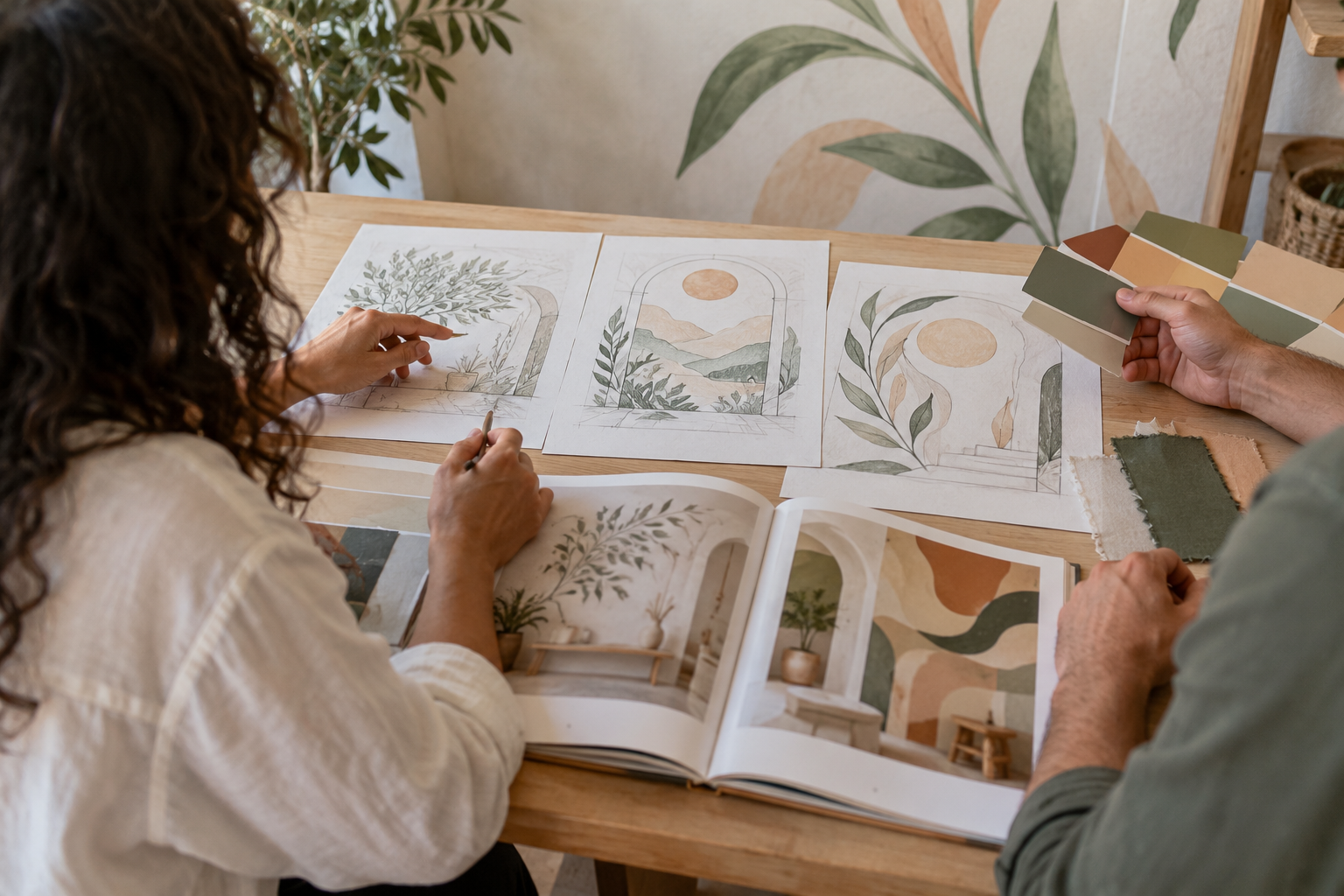
Choosing a mural artist is different from buying a finished artwork. A mural is created for a specific wall, audience and atmosphere. It needs to respond to the architecture, work at a larger scale and remain visually strong long after the paint has dried.
Whether you are planning a feature wall for a home, restaurant, office, salon or public-facing space, the right artist should be able to translate your ideas into something original without losing their own artistic voice. The following points will help you compare artists with clarity and commission a mural with confidence.
1. Begin with the portfolio—not the follower count
A strong portfolio shows more than attractive photographs. Look for consistency in composition, colour, line quality and finish. Pay attention to how the artwork relates to doors, corners, furniture, lighting and the people moving through the space.
It is also useful to look for variety. An experienced mural artist may have a recognizable visual language while still adapting each design to a different client and environment. If every project looks identical, ask whether the artist can respond to your space rather than simply repeat an existing formula.
When reviewing a mural portfolio, consider:
- Does the work still feel balanced when viewed from across the room?
- Are the edges, curves and detailed areas finished cleanly?
- Does the mural complement the architecture instead of competing with it?
- Can you see completed projects in real environments, not only digital mockups?

2. Look for site-specific thinking
The strongest murals feel as though they belong exactly where they are. Before proposing a design, a professional artist should ask about the purpose of the room, who uses it, how it is seen and what you want people to feel there.
They should also examine practical details such as wall dimensions, surface condition, natural and artificial light, viewing distance, existing colours and nearby architectural features. These observations influence the scale, contrast and amount of detail that will work best.
This site-specific approach is what turns decoration into meaningful art. If you are still deciding whether a mural suits your room, read how a custom mural can transform an interior space.
3. Ask how the creative process works
A clear process protects both the client and the artist. Before work begins, you should understand what happens at each stage and when your feedback is needed.
A professional mural commission will usually include:
- Discovery: discussing the space, goals, audience, style and practical requirements.
- Site review: confirming measurements, surface condition, access and lighting.
- Concept development: creating a direction, palette and preliminary composition.
- Design approval: refining the selected concept within an agreed number of revisions.
- Wall preparation and painting: protecting the room, preparing the surface and completing the mural.
- Final review: inspecting details, completing touch-ups and sharing care instructions.
Ask what is included in the design fee, how many revisions are allowed and when the concept becomes final. This keeps the collaboration creative without allowing the project to become vague or open-ended.
4. Compare proposals, not just prices
The lowest quote is not always the most affordable project in the long run. Two artists may price the same wall very differently because their estimates include different levels of design work, preparation, materials, equipment, assistants, travel or protective coatings.
A useful proposal should clearly explain:
- the design and consultation included;
- surface preparation and wall repairs, if needed;
- paint, primer and protective finish;
- equipment such as ladders, lifts or scaffolding;
- the estimated painting schedule;
- payment stages and revision terms;
- what is excluded from the quote.
For realistic planning ranges and the factors that affect a quote, see the 2026 Toronto mural pricing guide.
5. Discuss materials and longevity
The correct paint system depends on the wall and its environment. An indoor feature wall in a quiet residential space has different needs from a restaurant hallway, exterior brick wall or high-traffic commercial interior.
Ask the artist how they select primer, paint and finish for the surface. A good answer should consider adhesion, moisture, sunlight, cleaning and physical wear—not simply the colour palette. The artist should also explain whether a protective coating is recommended and how the mural can be maintained.
6. Pay attention to communication
A mural commission can take days or weeks from the first conversation to completion. Communication should therefore feel organized from the beginning. Notice whether the artist asks thoughtful questions, follows up clearly and sets realistic expectations.
For businesses, scheduling may need to work around customers, staff or operating hours. For homes, the artist should explain how floors and furniture will be protected and how the room will be left each day. Reliability is part of the artwork because it shapes the entire experience of bringing it into the space.
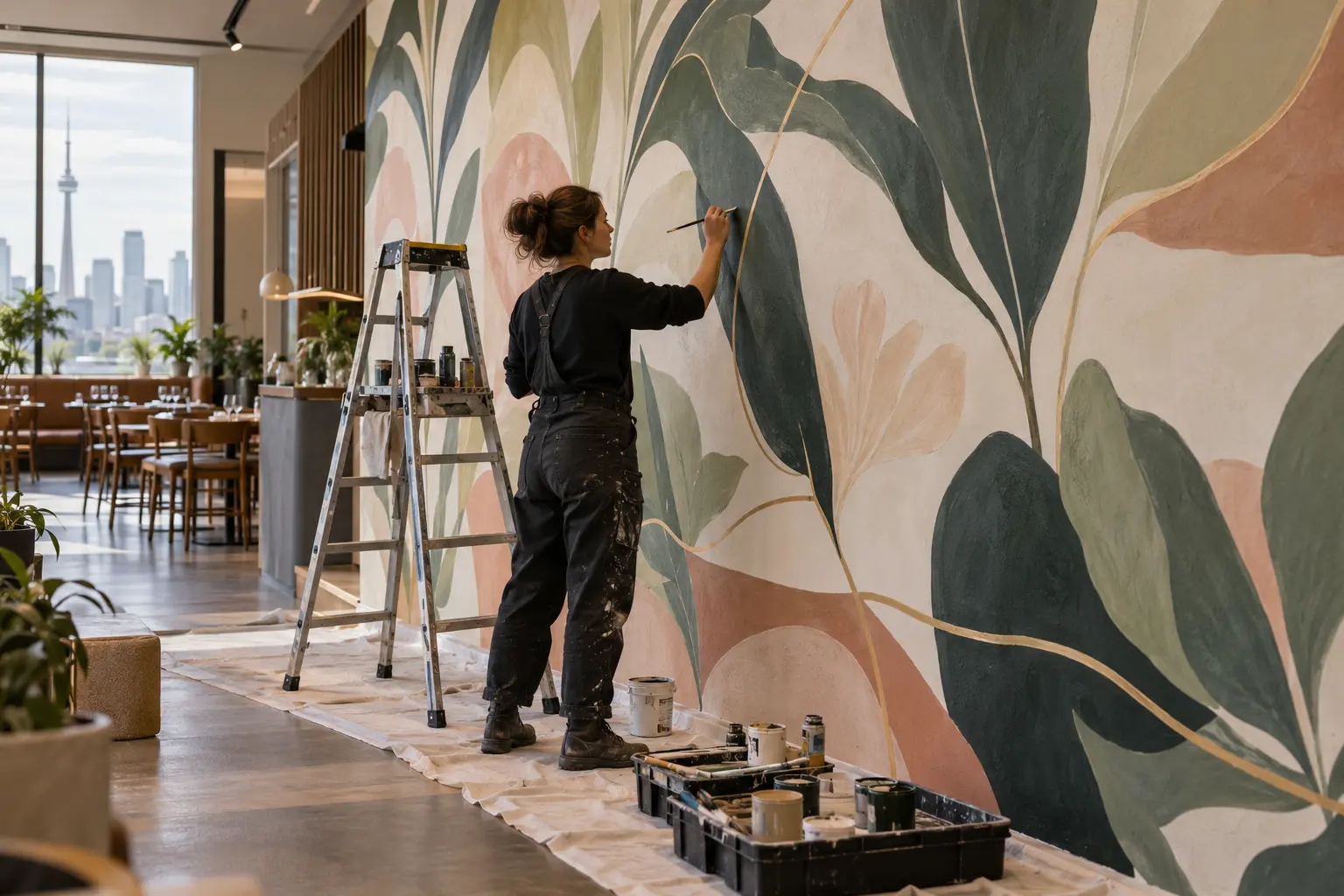
7. Clarify contracts, access and responsibility
Before painting begins, the project should be documented in writing. The agreement should identify the approved design, wall location, dimensions, schedule, payment terms, cancellation or postponement conditions and responsibility for preparing the site.
For commercial or publicly accessible locations, ask whether the artist can provide proof of insurance when required. The property owner or manager should approve the installation, and any building-specific access, safety or operating rules should be confirmed before the project date.
Questions to ask a mural artist
These questions quickly reveal whether an artist is a good fit:
- Have you painted a wall with a similar surface, size or environment?
- How do you develop an original concept for the space?
- What information do you need before preparing a quote?
- How many design revisions are included?
- What materials and protective finish do you recommend?
- How long will design and installation take?
- What does the client need to prepare before you arrive?
- How do deposits, progress payments and final payment work?
Red flags to notice
Be cautious when an artist cannot show completed large-scale work, provides a quote without asking about the wall, avoids written terms or promises an unusually short schedule without explaining preparation. A copied design or an image taken from another artist’s portfolio is another clear warning sign.
You should also feel comfortable asking questions. The best collaborations allow space for honest conversation while respecting the artist’s professional judgment.
Why choosing a local Toronto mural artist helps
A Toronto-based artist understands the practical realities of working in homes and businesses across the city and GTA—from condo access and loading times to changing light, seasonal exterior conditions and busy commercial schedules. Local availability also makes site visits, colour review and future touch-ups easier to coordinate.
Most importantly, choose someone whose work makes you feel something and whose process gives you confidence. A mural becomes part of the identity of a space. The right artist will listen carefully, challenge the obvious solution and create something that feels personal, intentional and lasting.